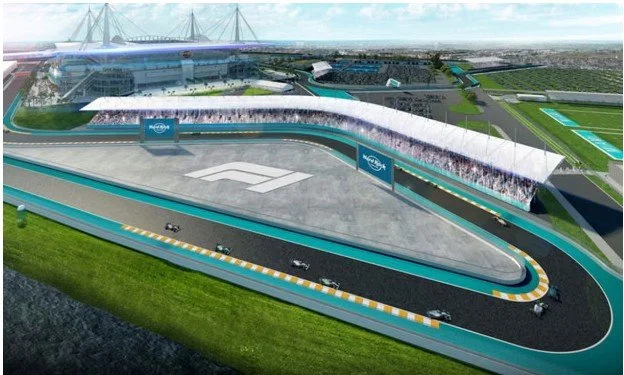
F1 Miami
Community Noise AbatementCase Study: Leider Acoustics, Colby Leider, and Formula 1 in Miami
Introduction
When Formula 1 announced plans to expand its presence in the United States, Miami emerged as a prime candidate for a new Grand Prix. The city offered global visibility, favorable climate, and an appetite for large-scale events. However, unlike purpose-built racing circuits located in remote areas, the proposed Miami race would take place in close proximity to dense residential communities surrounding Hard Rock Stadium.
This fundamental constraint transformed what might have been a straightforward event deployment into a complex environmental acoustics problem. At the center of this issue was Colby Leider, whose firm, Leider Acoustics, was engaged to analyze the potential noise impact of Formula 1 racing in an urban Miami context. The resulting work became a defining example of how acoustical engineering can influence public discourse, regulatory scrutiny, and large-scale event planning.
Context: Formula 1 Meets Urban Miami
Miami Grand Prix was envisioned as a recurring, globally televised event capable of delivering economic impact on the scale of the Super Bowl—every year. The proposed circuit would wind around Hard Rock Stadium, placing high-performance race cars within immediate proximity of residential neighborhoods, schools, and local businesses.
Unlike temporary urban races in cities with established infrastructure buffers, Miami’s layout introduced minimal spatial separation between the track and noise-sensitive receptors. This raised immediate concerns about environmental noise exposure, particularly given the acoustic signature of Formula 1 vehicles.
Although modern Formula 1 cars are quieter than their pre-hybrid predecessors, they still generate extremely high sound pressure levels, especially during acceleration. These levels are not only loud but also broadband, containing significant low-frequency energy that propagates efficiently over long distances. In an urban environment, reflections from buildings and ground surfaces can further reinforce perceived loudness.
The Role of Leider Acoustics
Leider Acoustics approached the problem as a full-scale environmental noise assessment, applying methodologies typically reserved for infrastructure projects such as highways, airports, and industrial plants. The goal was not simply to estimate loudness at the track, but to predict how sound would propagate through the surrounding community.
Colby Leider and his team developed a detailed acoustic model that incorporated:
Source characteristics of Formula 1 vehicles, including sound pressure level as a function of speed and engine load
Geometric representation of the proposed track layout
Atmospheric effects such as temperature and humidity
Ground absorption and reflection properties
Barrier effects and diffraction
Using these inputs, the firm generated spatial noise maps that estimated sound levels at varying distances from the track. These maps were critical in translating abstract acoustic data into something tangible for stakeholders.
Findings: A High-Impact Acoustic Environment
The analysis revealed that Formula 1 racing would produce sound levels far exceeding typical community noise thresholds across a wide radius. Peak levels near the track were estimated to approach 120 dB, comparable to the acoustic energy of a jet aircraft during takeoff at close range. More significantly, levels exceeding 100 dBA were projected to extend well into surrounding neighborhoods.
From a technical standpoint, this raised several concerns. First, sustained exposure above 85 dBA is widely recognized as a threshold for potential hearing damage over time. While race events are intermittent rather than continuous, their intensity and recurrence introduce cumulative exposure considerations.
Second, the spectral content of the noise—particularly its low-frequency components—meant that conventional mitigation strategies would have limited effectiveness. Low-frequency sound is less attenuated by distance and more capable of penetrating building envelopes, making it especially problematic in residential contexts.
Finally, the impulsive nature of racing noise—characterized by rapid fluctuations in level due to acceleration, braking, and gear changes—contributes to increased annoyance and perceived loudness, even when average levels are controlled.
Public Response and Stakeholder Dynamics
The findings from Leider Acoustics did not remain confined to technical reports. They became central to public discussions about the viability of the race. Community groups, local officials, and residents cited the analysis as evidence that the event could impose unacceptable environmental and health impacts.
For residents, the issue was not merely about loudness, but about quality of life. The prospect of recurring high-intensity noise events raised concerns about sleep disruption, school environments, and general livability. Unlike one-time events such as the Super Bowl, the Miami Grand Prix would return annually, creating a persistent acoustic footprint.
At the same time, event organizers and city stakeholders emphasized the economic benefits of hosting a Formula 1 race. Tourism, global media exposure, and local business stimulation were all presented as compelling justifications. This created a classic tension between economic development and environmental impact.
Leider Acoustics, through its analysis, effectively introduced quantitative rigor into this debate. Rather than relying on subjective impressions, stakeholders now had access to modeled data that could be evaluated against regulatory standards and health guidelines.
Engineering Constraints and Mitigation Challenges
One of the key insights from the case was that noise mitigation in this context is inherently constrained. Traditional approaches such as sound barriers can provide meaningful attenuation at mid and high frequencies, but are significantly less effective at low frequencies. Moreover, the scale of the event and the geometry of the track limit where such barriers can be placed.
Operational strategies—such as limiting race times or reducing the number of sessions—offer partial relief but do not eliminate peak exposure. Similarly, building-level mitigation (e.g., improved façade insulation) shifts the burden onto residents rather than addressing the source.
These constraints underscore a fundamental principle in environmental acoustics: source-location compatibility is often more effective than post hoc mitigation. In other words, where you place a noise-generating activity can matter more than how you attempt to control it after the fact.
Outcome and Broader Implications
Despite early opposition, the Miami Grand Prix ultimately moved forward, with adjustments to planning and ongoing attention to community concerns. However, the involvement of Leider Acoustics left a lasting imprint on how such events are evaluated.
This case demonstrates that acoustical engineering is not merely a supporting discipline but can act as a gatekeeper in urban development. By quantifying impacts that are otherwise difficult to visualize, acousticians can influence policy decisions, community negotiations, and design strategies.
More broadly, the case reflects a growing trend in which environmental considerations—particularly noise—are becoming central to the planning of large-scale events. As cities become denser and more sensitive to quality-of-life issues, the tolerance for high-impact noise events diminishes.
Conclusion
The intersection of Leider Acoustics, Colby Leider, and the Miami Grand Prix illustrates the power of technical expertise in shaping real-world outcomes. What began as a proposal for a high-profile sporting event evolved into a complex negotiation between engineering realities, community interests, and economic ambitions.
At its core, this case reinforces a critical insight: in modern urban environments, sound is not just a byproduct of activity—it is a defining factor in whether that activity can coexist with the communities around it.