Community Noise AbatementUltra Music Festival
Case Study: Leider Acoustics, Colby Leider, and Ultra Music Festival Miami
Environmental Acoustics, Urban Density, and the Engineering of Cultural Sound
Introduction
Each spring, downtown Miami becomes host to one of the most acoustically demanding cultural events in the world: the Ultra Music Festival. Unlike most large-format music festivals, Ultra is not buffered by rural isolation or expansive open land. Instead, it is embedded within a dense, high-rise urban environment centered around Bayfront Park—a setting that fundamentally reshapes how sound behaves, propagates, and is perceived.
In this context, acoustics is not merely a technical consideration; it becomes a governing constraint on whether the event can exist at all. This is where Leider Acoustics, led by Colby Leider, has played a central role. Their work represents a shift in how urban festivals are engineered—moving from reactive noise control to fully integrated acoustic system design operating at city scale.
Historical Context: Ultra’s Evolution and Acoustic Escalation
4
Ultra began in 1999 as a relatively modest beachfront gathering. Over time, it evolved into a global flagship for electronic dance music, with production levels rivaling stadium-scale touring acts. As the festival moved into and expanded within Bayfront Park, several critical changes occurred:
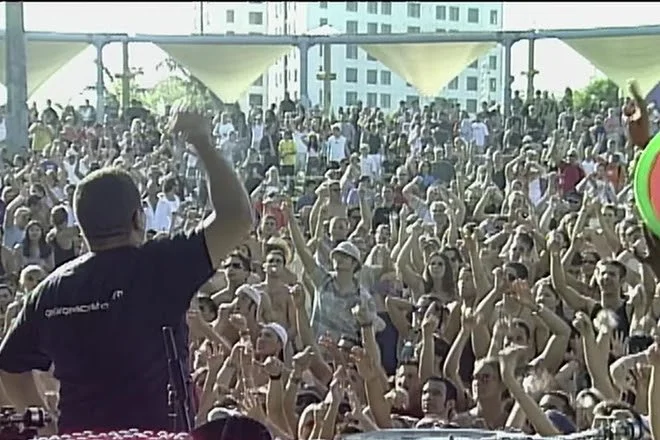
Audience scale increased from thousands to well over 150,000 attendees
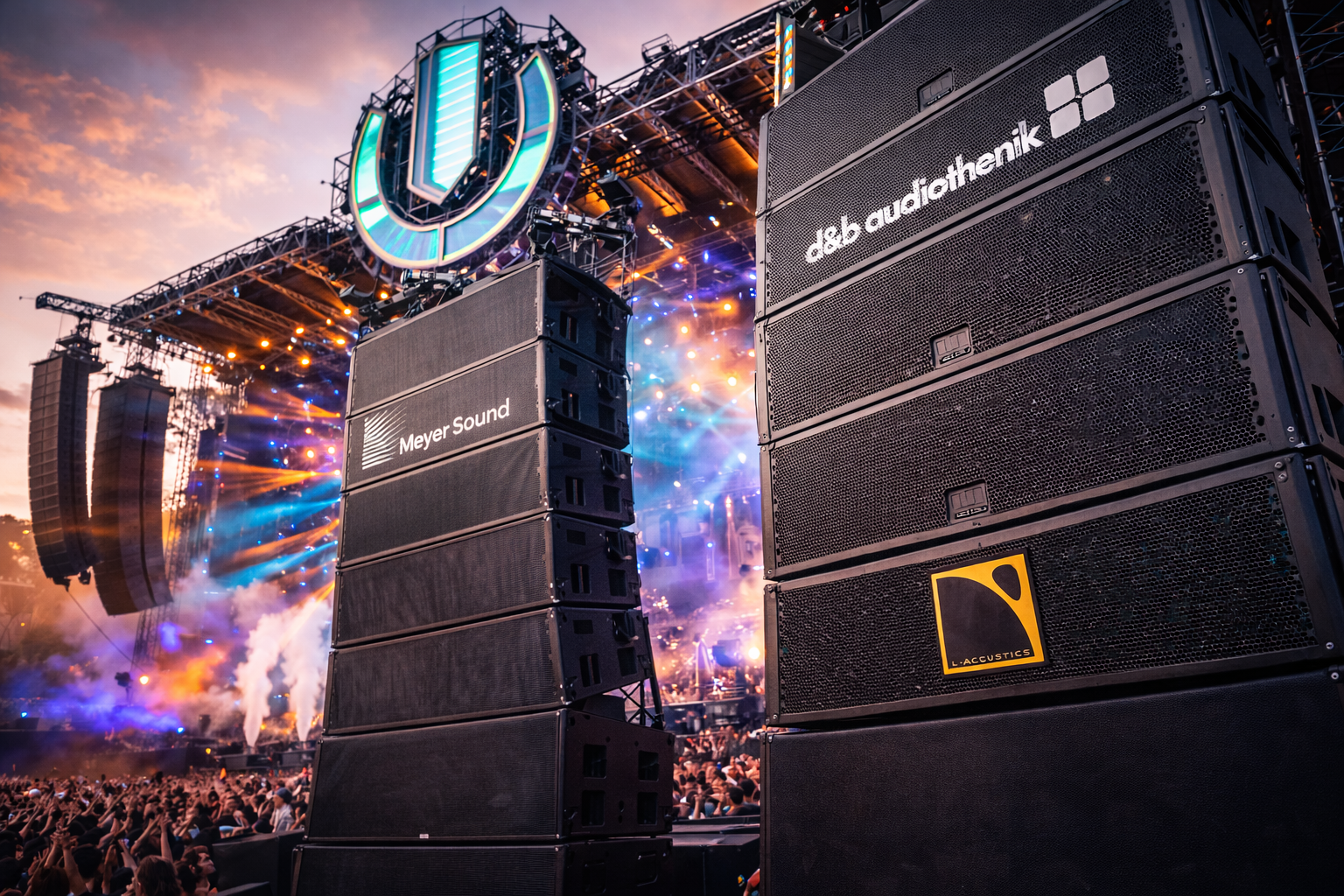
Stage count expanded, introducing multiple simultaneous high-output sound systems
Spectral density intensified, with modern EDM emphasizing sub-bass energy at unprecedented levels
Urban encroachment increased, as Miami’s downtown residential population grew rapidly
These trends converged into a single problem: the acoustic footprint of the festival expanded faster than the city’s tolerance for it.
The Acoustic Environment: A Non-Ideal Outdoor System
At Bayfront Park, the assumption of “free-field” propagation—common in outdoor acoustics—completely breaks down.
Key Environmental Factors
Reflective Vertical Surfaces
Glass-clad residential towers act as large-scale reflectors, re-radiating sound energy back into the urban space. These reflections introduce time-delayed arrivals that increase perceived loudness and reduce clarity.Waterborne Propagation
Biscayne Bay functions as an acoustically reflective boundary at low grazing angles, allowing low-frequency energy to travel with minimal attenuation.Receiver Elevation Variability
Unlike ground-level listeners, residents occupy vertical strata—10th, 20th, 40th floors—placing them directly in line with elevated line-array lobes.Reduced Atmospheric Absorption at Low Frequencies
The dominant spectral content of EDM (30–100 Hz) experiences negligible atmospheric loss over urban distances.
The result is a hybrid propagation field combining direct radiation, multi-path reflections, and low-frequency dominance—conditions that significantly amplify community impact relative to typical outdoor concerts.
Leider Acoustics’ Approach: From Compliance to Control
Leider Acoustics approached Ultra not as a “noise problem,” but as a system-level acoustic design challenge. Under Colby Leider, the methodology evolved into three tightly coupled domains:
1. Predictive Modeling at Urban Scale
Rather than relying on simplified distance-based attenuation models, Leider Acoustics developed detailed predictive simulations incorporating:
Source directivity functions of line arrays and subwoofer systems
3D urban geometry, including building façades and terrain
Frequency-dependent propagation, especially below 125 Hz
Meteorological variables, such as temperature gradients affecting refraction
Outputs included:
High-resolution SPL contour maps
Floor-by-floor exposure predictions for high-rise buildings
Time-varying exposure scenarios aligned with performance schedules
This modeling allowed stakeholders to anticipate not just how loud the festival would be, but where and when it would be most intrusive.
2. Loudspeaker System Co-Design
A key innovation in this project was integrating acoustical consulting directly into the sound system design process.
Instead of treating the PA as fixed, Leider Acoustics worked alongside system engineers to modify:
Array Geometry and Aiming
Down-tilting arrays to reduce long-throw spill into residential towers
Tightening vertical dispersion to limit unintended elevation coverage
Subwoofer Deployment
Implementation of cardioid and end-fire arrays to reduce rearward radiation
Spatial redistribution of subwoofers to minimize coherent summation toward sensitive areas
Stage Orientation
Aligning stages to direct maximum energy away from the most impacted residential zones
These interventions transformed the PA system into a directionally optimized acoustic emitter, rather than a purely audience-focused system.
3. Real-Time Monitoring and Adaptive Control
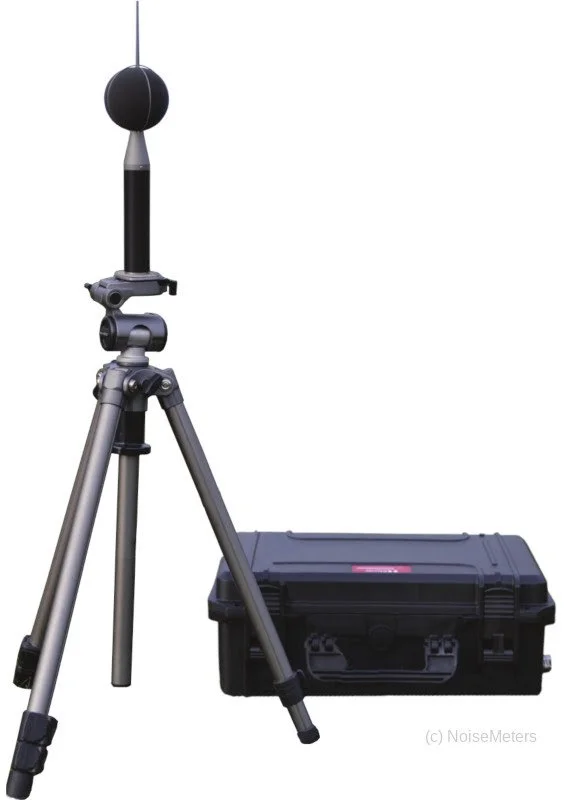
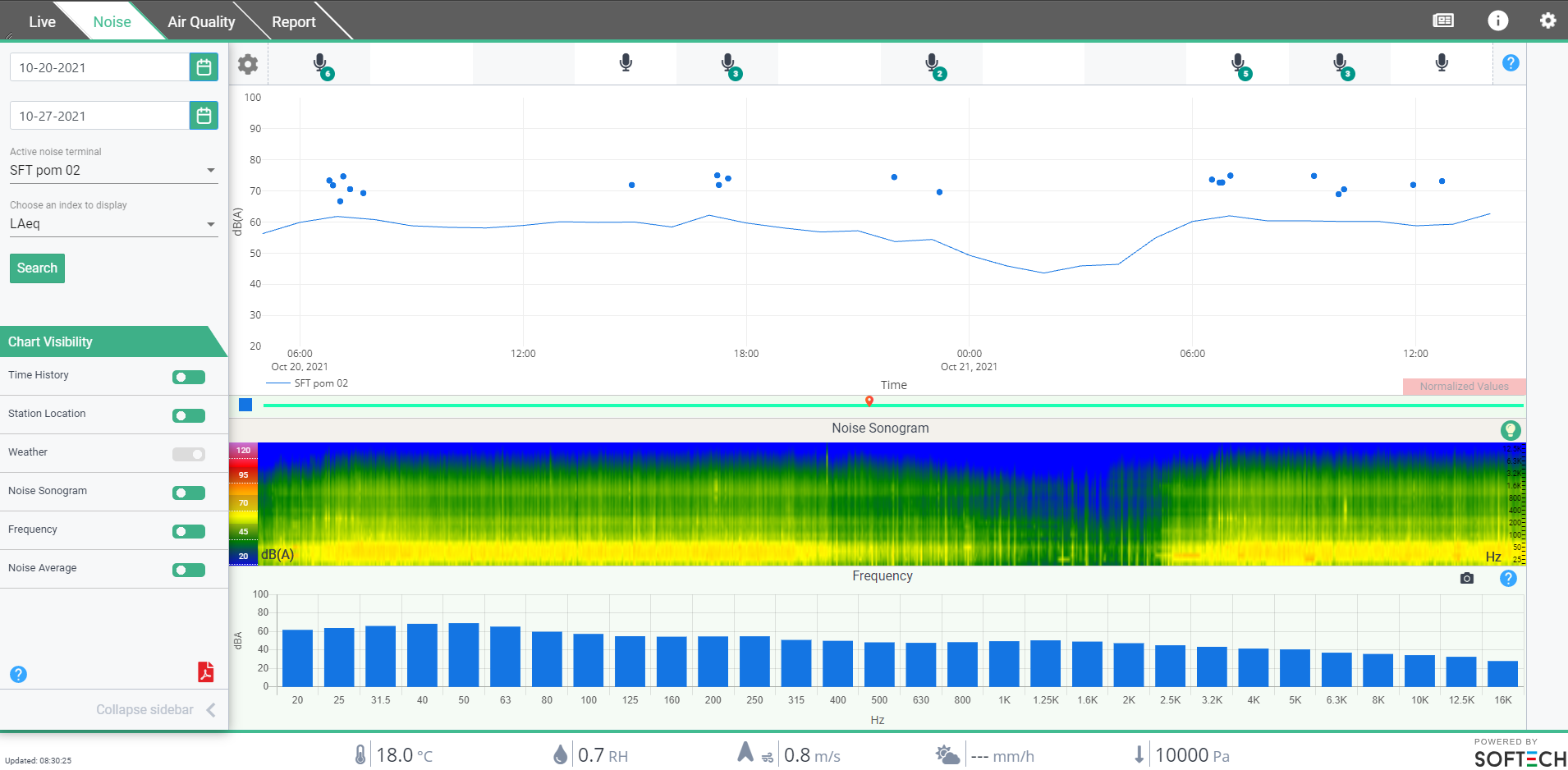
During the event, Leider Acoustics deployed a distributed monitoring network measuring:
LAeq (time-averaged levels)
Lmax (peak levels)
Frequency-resolved spectra
This data fed into a real-time decision loop:
Measurements compared against regulatory thresholds
Trends identified (e.g., low-frequency buildup under certain atmospheric conditions)
FOH engineers notified and adjustments made dynamically
This approach effectively turned Ultra into a closed-loop acoustic system, where output could be continuously tuned in response to environmental feedback.
The Human Dimension: Perception, Annoyance, and Policy
The technical challenge is only part of the story. Ultra exists within a politically and socially sensitive environment.
Residents in nearby towers experience sound differently than festival attendees:
Inside vs. outside perception: Low-frequency energy penetrates buildings and is felt as vibration
Temporal sensitivity: Evening and nighttime exposure has disproportionate impact
Cumulative fatigue: Multi-day exposure compounds annoyance
Importantly, annoyance is not strictly correlated with SPL. Factors such as spectral content, modulation, and expectation play major roles.
Leider Acoustics’ work helped translate these subjective experiences into measurable parameters that could inform:
City permitting conditions
Curfew and scheduling constraints
Acceptable exposure thresholds
In doing so, the firm functioned not only as engineers, but as intermediaries between culture and community.
Constraints: Why Ultra Cannot Simply Be “Turned Down”
A recurring misconception is that reducing volume alone would solve the problem. In reality:
Lowering levels degrades the festival experience disproportionately at the audience
Low-frequency energy—most problematic for residents—is often the least affected by modest level reductions
Multi-stage interference can create complex summation patterns independent of individual stage levels
Thus, the solution space is constrained. The problem is not minimizing sound, but redistributing it intelligently.
Outcomes and Industry Impact
Ultra continues to operate in downtown Miami, but its survival is contingent on increasingly sophisticated acoustic management frameworks shaped by Leider Acoustics.
The project has had several broader implications:
Urban Festival Design Paradigm Shift
Festivals are now engineered as integrated acoustic systems, not collections of independent stages.
Elevated Role of Acousticians
Firms like Leider Acoustics are now embedded early in planning, influencing layout, scheduling, and system design.
Regulatory Evolution
Cities are moving toward data-driven permitting, requiring predictive modeling and real-time compliance verification.
Technical Innovation in Live Sound
The need to control environmental impact has accelerated adoption of:
Directional subwoofer arrays
Precision line-array optimization
Measurement-driven mixing workflows
Conclusion
The collaboration between Colby Leider, Leider Acoustics, and the Ultra Music Festival represents a defining case in modern environmental acoustics.
Unlike traditional infrastructure projects, where noise is an unwanted byproduct, Ultra is built entirely around sound. The challenge, therefore, is not suppression, but precision control within a constrained urban system.
This case demonstrates that in dense cities, large-scale cultural events can persist—but only when sound is treated as a first-class engineering variable, modeled rigorously, monitored continuously, and negotiated transparently.
In Miami, Ultra is no longer just a festival. It is a live, city-scale acoustic system—designed, measured, and continuously rebalanced in real time.